Ingrown toenails are a common foot problem causing the edge or corner of your nail to start growing towards and into the surrounding skin. Although mild ingrown toenails are normal and you may experience them multiple times throughout your lifetime, and genuinely, persistent pain and redness aren’t ever a good sign. When you start noticing pus and swelling around ingrown toenail, it may lead to an infection.
Mild ingrown nails are easily healed with proper care at home. However, more severe or recurring cases naturally require careful medical treatment from a reliable Podiatry Clinic .
What Is an Ingrown Toenail? An ingrown toe nail is when your toenail starts growing downwards into your skin. Instead of growing straight outward with a slightly curved shape, it starts growing extra curved, and a corner or edge starts growing inwards. This becomes incredibly painful, and if anything like shoes or sandals press against the nail, the pressure causes the pain to increase, making it uncomfortable.
One of the leading ingrown toenail causes is simply due to cutting the nail incorrectly. Apart from Corns and Calluses , an ingrown nail is the reason 20% of people visit a doctor.
What Are the Symptoms of an Ingrown Toenail? Not all foot pain comes from the toes. Conditions such as plantar fasciitis and heel spurs can also cause discomfort. Even though they affect the heel rather than the toenail, they can be mistaken as part of the whole condition. Ingrown toenail symptoms are:
The corner of your nail is growing downwards into the skin instead of growing straight outwards
Pain and swelling around the nail, which increases when pressure is applied
The skin around the nail is hardening, feeling like callused skin
The nail is digging into the skin
Possible bleeding and tenderness around the nail
If symptoms seem to get worse in the next 2 days, it may cause an infection; hence, a visit to your healthcare provider is a must.
What Are the Common Causes of Ingrown Toenails? In the foot, 80% of the time, it’s the big toe that is likely to develop an ingrown nail. And since the causes are so common, a small percentage of the general population is always dealing with them. To avoid them for yourself, it’s necessary to know what to be careful about. Here are the most common ingrown toenail causes:
Improper Toenail Trimming There’s a proper way and method to cut your toenails. If you end up cutting your nail too short, you’ll not only injure yourself; you’ll also encourage the nail to grow in a twisted shape, causing painful ingrown corners. Proper nail trimming techniques include cutting the nail straight across the edges. Many people cut their toe nails in a rounded, curved shape; it isn’t recommended, as this confuses the nail bed and the nail tends to curve inwards as it grows.
Wearing Tight or Poorly Fitted Shoes Our feet are meant to feel free. They allow us to move and feel the earth, stabilizing ourselves on the ground. When people habitually wear tight or poorly fitting shoes, they cause an array of problems. Tight shoes are also a hidden cause of Flat Feet in Adults . They press the nail bed hard against the skin and restrict space at the front, especially for people who wear such shoes every day for a long amount of time. This restricted space tricks the nail to grow downwards, causing the curved shape.
Toe Injuries and Repeated Pressure It’s quite common to stub your toe against a door frame, chair, or table corner. Often a very sensitive, strong wave of pain follows that reduces within the next few minutes. However, the nail and heel could experience trauma. This is why stubbing your foot too hard against a surface can be one of the top causes of heel pain and ingrown toe nails. Repeated injuries or pressure from playing sports can also cause ingrown nails in your feet.
Natural Nail Shape and Genetics Some people just have a naturally curved shape in their toenails due to genetics. That’s a different story entirely because, depending on the severity of the curved shape, ingrown toenails may be very common or recurring for such people. Inherited nail characteristics can often be a problem for people, and they might need to follow precautions and proper nail trimming techniques, or it might lead to an infected ingrown toenail.
What Are the Treatment Options for Ingrown Toenails? If you’re wondering how to fix ingrown toenail at home, it’s quite easy. But even if you’re unable to do it yourself, you can easily get a medical provider to help. Many people are under the impression that treatment for ingrown nails is painful; that isn’t the case. When done by a professional, it is done carefully with precision after numbing your toe to avoid pain.
Home Remedies for Mild Ingrown Toenails Mild ingrown nails can be treated at home. If the edge isn’t too curved or deep, try to cut off a small corner. Soak your feet in warm, soapy water to soften the skin around the nail and reduce tenderness. This will lower the pain. Later, you can keep the area clean and dry, allowing the skin to breathe. Avoid wearing shoes or sandals that cover your toes, as they can make the ingrown nail worse. If the nail hurts too much, do not try to cut it yourself and seek help from a doctor immediately.
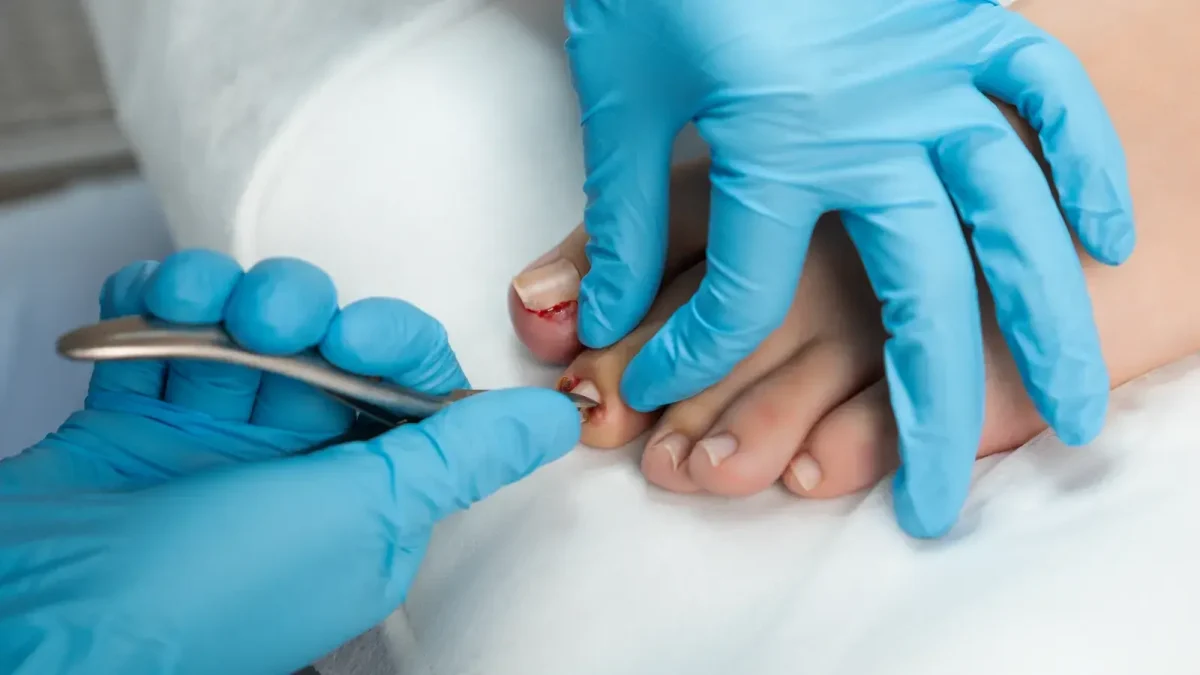
Medical Treatments for Ingrown Toenails The medical treatment for your toenail could be spike removal or nail lifting/bracing. During spike removal, your doctor will carefully remove the small corner of the nail that’s pressing into your skin and flesh. For this, you won’t need any surgery. Similarly, in nail lifting or bracing techniques, the podiatrist will lift the edge of the nail and place a small cotton wick or nail brace underneath your skin in order to guide it in growing above and outwards.
Surgical Treatment for Recurring Ingrown Toenails Permanent surgical treatment is required for recurring ingrown toenails. It’s usually needed for people who have genetically curved nail shapes or have experienced an injury that causes their nail to grow inwards every month. These surgical methods can include partial or total nail avulsion, chemical and surgical matricectomy, or radiofrequency ablation. Your doctor will choose the best method for you based on your condition.
When Should You See a Doctor for an Ingrown Toenail? Well, you’ve already tried taking care of it at home but you’re still confused about it if you need to see a doctor or not. Naturally, it can get frustrating. However, you should see a doctor or podiatrist for an ingrown toenail if:
You’ve tried taking care at home, but it isn’t helping even after a couple of weeks
Signs of infection develop, such as pus or severe throbbing pain. It may also cause increased redness and swelling spreading from the toe
You have a fever or generally feel hot or shivery
You have diabetes, poor circulation, or a weakened immune system
How Can You Prevent Ingrown Toenails? Preventing toenails from getting ingrown is fairly simple. Taking precautions can save us from falling into medical conditions that take a long time to heal. For medical situations, it’s always best to prioritize prevention instead of looking for cures later on. You can prevent ingrown toenails by:
Trimming your nails properly and avoiding cutting them into curved shapes
Choosing shoes that give you enough room for your toes
Keeping your feet clean and dry
Protecting your toes from repeated nail injuries
If you have naturally curved nails and experience recurring problems, regular foot care and professional guidance will be beneficial for you.
Conclusion All it takes to keep ingrown nails in your toes at bay is to address the issues related to them early. Since it’s easy to manage with proper footwear and nail trimming techniques, ingrown nails shouldn’t get too severe. Most cases are easy to solve and heal at home. But if the issue isn’t going away even with care and the swelling persists, that’s when you know you need to go see a podiatrist at a Canadian Medical Center .
FAQs What is the main cause of an ingrown toenail? The main causes of an ingrown toenail are wearing shoes that are too tight or experiencing trauma or injury to the nail. More common reasons can include cutting the nail too short or the natural nail shape due to genetics.
Can an ingrown toenail heal on its own? Even though a mild ingrown nail can heal on its own, it still requires proper care at home. If some precautions aren’t taken, it could result in redness and swelling that progressively get worse.
How do podiatrists treat ingrown toenails? Podiatrists will treat your ingrown nail depending on the severity. For a simple ingrown toe nail problem, your doctor will use techniques like nail lifting/bracing, or spike removal. If the situation is more severe and needs to be treated right away, minor surgical ingrown toenail treatment like Partial and Total Nail Avulsion (TNA) can help.
How long does an ingrown toenail take to heal? Depending on the severity, it could take anywhere between 1 and 4 weeks. Mild cases may go away with proper care within 3-7 days. After surgical removal, it can easily take 4 weeks with proper care.
Is ingrown toenail removal painful? It can be if you try to fix a severe ingrown nail by yourself or with the help of an unqualified person at home. When podiatrists remove your ingrown toe nail, they use local anaesthesia and perform the procedure when your toe is numb.


 Call Us