
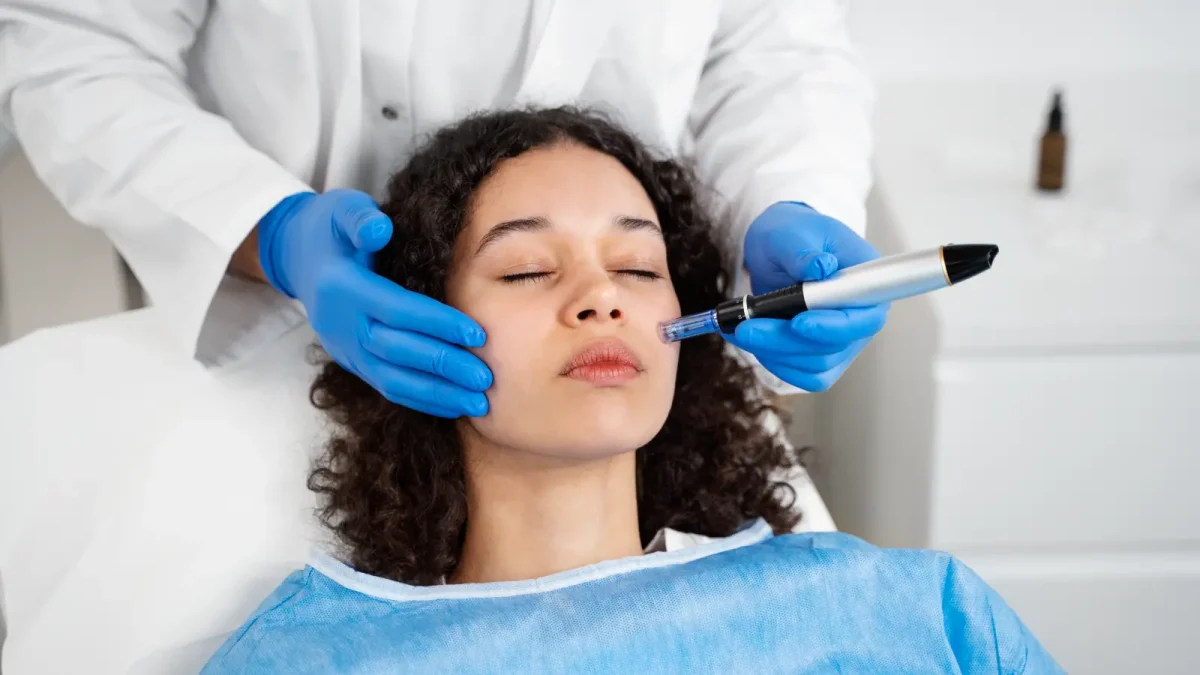
Acne scars can last a long time after the acne has healed. If you’re looking to boost their look in any way, you might want to consider microneedling for these treatments talk to a professional skin care expert about this procedure. It uses a fine needle device to create very small punctures in the skin, triggering the body’s healing and response promoting collagen production.
Although microneedling can make a difference, it cannot remove all scars, and results vary per individual. The type of scar, your skin type, and the treatment plan all play a role. This article explains what microneedling entails, what recovery may look like, and the questions to ask before booking.
Table of Contents
What Is Microneedling?
Microneedling is a minimally invasive treatment done using a handheld roller or electric device. Fine needles form small holes in the skin. As the skin heals, the skin produces collagen and elastin, proteins that support skin structure.
A trained professional will evaluate your skin and determine the best treatment plan. Two or more treatments might be suggested depending on the type of scar and skin condition. Not everyone can benefit from microneedling, so discuss any current acne, skin conditions, medications, and medical history during your consultation.
How Can Microneedling Help With Acne Scars?
When done correctly, microneedling can help brighten up the complexion and make acne scarring more aesthetically pleasing by stimulating the skin’s natural healing and regeneration. The advantages of microneedling acne scars include improving the appearance of mild acne scars over time and improving skin texture.
The outcome is dependent on the nature and severity of the scars. Certain scars may require a variety of treatments and may not respond to a single treatment. Your skin professional can evaluate your concerns and explain what may be suitable for you, such as microneedling.
What Happens During Treatment?
Before treatment, the clinician will check your skin, look at your health history, and discuss your goals before treatment. They may take photos to help you compare your skin over time. Your skin will be cleansed, and topical anesthetic numbing cream will be applied beforehand to ease any pain.
The clinician then scans the treatment area with the microneedling device. You may feel mild warmth, slight discomfort, or a prickling sensation. The appointment depends on the area being treated.
Microneedling Before and After: What Results Can You Expect?
Before-and-after photographs of microneedling treatments can show changes in a person’s skin after microneedling, but they cannot apply to everyone. Photos may vary in light, angle, and when they were photographed after treatment.
Changes typically occur over time as the skin heals. Several sessions might be suggested, and it can take several months to determine the overall outcome. Request to see realistic illustrations and discuss how it might benefit your scars.
What Is Recovery Like?
The skin may be red and feel warm, tight, or sensitive after the microneedling. There is also a risk of dryness or flaking as the skin is healing. The redness may be more or less and may last longer or shorter. Obtain and adhere to post-care guidelines from your clinician. These may include avoiding the sun until the skin is healed, keeping the skin clean, and using the prescribed skin creams. When can you resume wearing makeup, exercising, or using your normal skin care products?
Is Microneedling the Only Option for Acne Scars?
No. The best method depends on your skin and the type of scars you have. A dermatologist can discuss if microneedling is an appropriate treatment or if another treatment might be a better fit during a consultation.
Also, ask the clinic about other treatments, like Morpheus8 Treatment, Sofwave treatment, or skin boosters. These treatments are not the same and cannot be substituted for one another. Your clinician can explain what they are and whether any of them are suitable for your concerns.
Frequently Asked Questions
Does microneedling actually fix acne scars?
Microneedling may improve the appearance of some acne scars, but it does not guarantee that scars will disappear. Results depend on the type and depth of the scars, your skin, and your treatment plan.
Does microneedling remove acne scars permanently?
Microneedling does not guarantee permanent removal of acne scars. It may help make some scars less noticeable, but results vary, and your skin continues to change over time.
What happens 3 days after microneedling?
Around three days after treatment, your skin may still be red, sensitive, dry, or slightly swollen. Some people may notice flaking as the skin heals.
Is microneedling 3 times a year enough?
There is no single schedule that suits everyone. The number and spacing of sessions depend on your skin, the concerns being treated, and how you respond.
What should I avoid after microneedling?
Follow your clinic’s specific aftercare advice. You may be asked to avoid direct sun exposure while your skin heals and to wait before using makeup or certain skincare products. Ask your clinician when you can resume your normal routine rather than relying on a general schedule.
What can I expect after microneedling?
You may have temporary redness, warmth, tightness, or sensitivity. Dryness or flaking can also occur. Your clinician should explain what to expect following your treatment and when to contact the clinic about a reaction.
Conclusion
If you have acne scars or skin texture that you are unhappy with, you may want to consider microneedling. A consultation will determine whether or not the procedure is appropriate for your skin, how many treatments you might need, and what recovery might entail. Before deciding on treatment at Canadian Medical Center, talk to a qualified skin professional about your concerns and treatment options.

 Call Us