
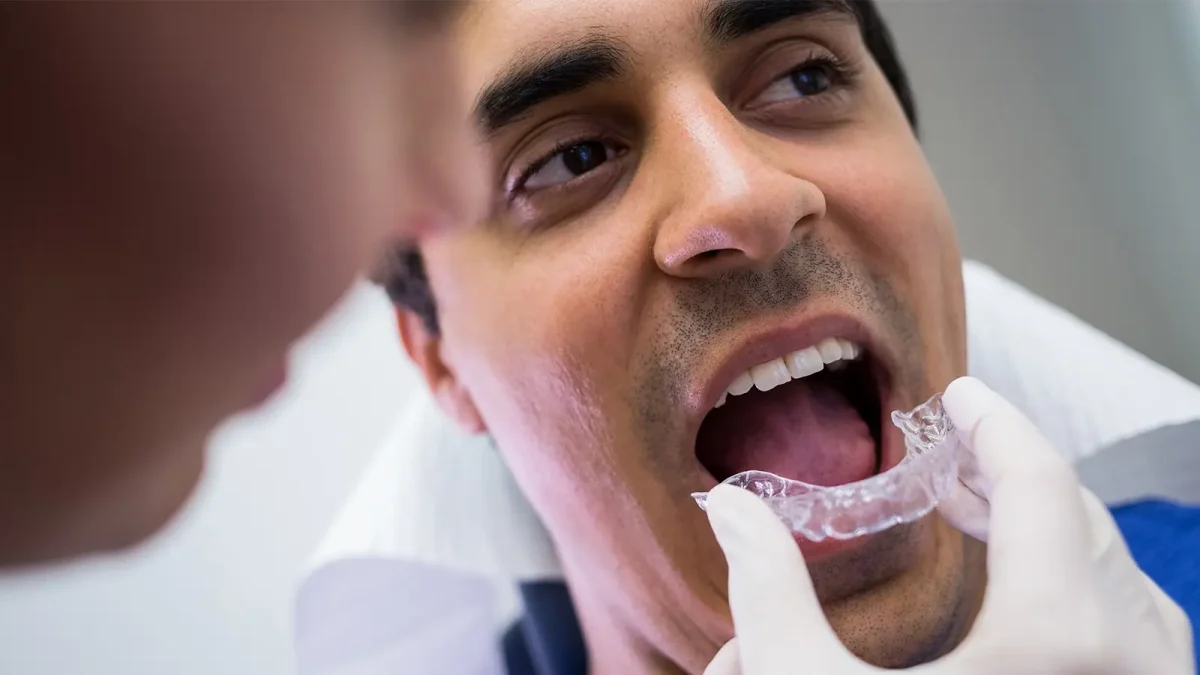
Want a straighter smile but not sure whether clear aligners or braces are the better choice?
Both options can straighten teeth, but they work differently and can fit into your daily life in different ways. The right choice depends on several factors, including your bite, the amount of tooth movement needed, comfort, appearance, cleaning, eating habits, treatment time, and budget.
A consultation at our Dental Clinic in Abu Dhabi can help you understand which option may be more suitable for your teeth and treatment goals.
What Are Clear Aligners?
Clear aligners are custom-made trays designed to fit over your teeth and gradually move them into new positions over time.
Treatment typically involves a series of trays, with each tray designed to make small adjustments to the position of your teeth. You can remove the aligners when eating, brushing, and flossing, which can make them easier to manage for many patients.
Dental aligners can be used to treat some cases of mild to moderate crowding, spacing, and specific bite issues.
One of the more popular systems is Invisalign clear aligners. However, not every case can be treated with aligners. A Specialist Orthodontist can assess your teeth and determine whether clear aligners are likely to work for you or whether braces may provide better control of tooth movement.
What Are Dental Braces?
Braces use brackets and wires to gradually move the teeth into their desired positions. Unlike removable aligners, braces remain attached to the teeth throughout treatment and provide continuous correction.
Different types of braces are available, and the most suitable option depends on your dental needs, treatment goals, and personal preferences.
Metal Braces
Traditional metal braces can treat a wide range of orthodontic issues and may be considered for more complex or detailed tooth movement.
Although they are generally more noticeable than clear or ceramic braces, modern metal braces are typically smaller and more comfortable than older designs.
Ceramic Braces
Ceramic braces work in a similar way to traditional braces but use tooth-coloured or clear brackets, making them less noticeable when you smile.
They can be an option for patients who prefer fixed orthodontic treatment but want a more discreet appearance.
Clear Aligners vs. Braces: Which One May Suit You Better?
One of the main advantages of clear aligners is that they are removable. This can make certain parts of your daily routine easier, particularly eating and cleaning your teeth.
Clear aligners may suit patients who prefer a more discreet option and are comfortable removing and reinserting their trays as recommended.
Braces may be more suitable for patients who need more complex tooth movement or who would prefer a fixed option without having to remember to wear removable trays consistently.
There is no single option that works best for everyone. The decision depends on your orthodontic needs, comfort, preferences, and ability to follow the recommended treatment routine.
Which Option Looks More Discreet?
Many patients choose clear aligners because they are less noticeable than traditional braces. The transparent trays can make orthodontic treatment more discreet, which may appeal to adults and teens who prefer not to have visible brackets and wires.
Ceramic braces can also offer a more subtle appearance than traditional metal braces.
If your main concern is the overall appearance of your smile rather than the alignment of your teeth, you may also wish to discuss cosmetic dentistry. Orthodontic treatment focuses on moving teeth, while cosmetic treatments can address aspects such as tooth colour, shape, and overall smile appearance.
Comfort and Daily Routine
Both braces and clear aligners can cause some pressure or discomfort as your teeth move.
With clear aligners, you may feel some tightness when you start wearing a new tray. This usually becomes more comfortable as your mouth adjusts. Because the trays have a smooth surface, many patients find them comfortable to wear.
Braces may cause some rubbing or mild irritation, particularly when they are first fitted or adjusted. This often improves as your mouth adapts.
Your daily routine is also an important consideration. Clear aligners need to be removed during meals and cleaned before being put back in. Braces remain in place but may require additional care around hard, sticky, or chewy foods.
Which Is Easier to Keep Clean?
With clear aligners, you can remove the trays before brushing and flossing, making it easier to maintain your usual oral hygiene routine. The trays also need to be cleaned regularly.
Cleaning around braces can require more effort because food and plaque can become trapped around the brackets and wires.
With either option, proper brushing, flossing, and regular dental check-ups are important.
After orthodontic treatment, some patients may also want to enhance the appearance of their smile and may explore options such as teeth whitening.
Do Clear Aligners Require More Commitment?
Clear aligners require daily commitment. They need to be worn for the recommended amount of time each day to keep your treatment on track. Because the trays are removable, staying consistent with wear is largely the patient’s responsibility.
Braces remain attached to the teeth throughout treatment, so they do not require the same level of daily decision-making about whether to wear them.
For patients who are concerned that they may not wear removable trays consistently, braces may be a more convenient option.
Clear Aligners Cost Compared With Braces
The cost of clear aligners can vary depending on the complexity of the case, the number of trays required, the treatment duration, and the system used.
The cost of braces can also vary depending on the type of braces, such as metal or ceramic braces, and the complexity of the treatment.
This means clear aligners are not always more expensive, and braces are not always the cheaper option.
The best way to understand the cost of your treatment is to have a dental assessment and receive a treatment plan based on your individual needs.
How Long Does Treatment Usually Take?
Treatment time varies for both braces and clear aligners, as every case is different.
Some minor alignment issues may be addressed within a few months, while more complex cases may take longer. With clear aligners, wearing the trays as recommended is important, as inconsistent wear may delay progress.
Regular follow-up appointments may also be needed to monitor your progress and make adjustments as your teeth move.
Ultimately, treatment time depends on the amount and type of tooth movement required rather than simply on whether you choose braces or aligners.
Can Clear Aligners Treat Every Case?
Clear aligners can address many common orthodontic concerns, including some cases of crowding, spacing, and bite problems.
However, they are not suitable for every patient. Some cases require greater control over tooth movement, and braces may be a more appropriate option.
The best way to determine which treatment is suitable for you is to have your teeth and bite assessed by a qualified dental professional.
Can Cosmetic Treatments Replace Braces or Aligners?
Cosmetic treatments such as dental veneers can improve the shape, colour, or appearance of certain teeth, but they do not move teeth in the same way as braces or clear aligners.
While veneers may address some cosmetic concerns, they cannot replace orthodontic treatment when crowding, spacing, or bite problems require correction.
The most suitable treatment depends on the changes you want to make to your smile and your overall dental needs.
What Should You Consider Before Choosing?
Before choosing between clear aligners and braces, consider how each option would fit into your daily routine.
Think about how consistently you can wear removable trays, how important a discreet appearance is to you, and whether you would prefer a fixed option that does not require you to remember to put it in.
If you prefer a removable and more discreet option, clear aligners may be suitable. For more complex cases, metal braces may be considered, while ceramic braces can offer a less noticeable fixed option.
Ultimately, the right choice depends on your dental needs, treatment goals, preferences, and lifestyle.
Frequently Asked Questions
Is it better to get braces or aligners?
It depends on your individual dental needs. Clear aligners may be suitable if you prefer a discreet, removable option, while braces may be recommended when more complex tooth movement is required.
What is the 30-minute rule with Invisalign?
The “30-minute rule” is sometimes used as a reminder not to leave clear aligners out for longer than necessary. The main priority is to wear your aligners for the amount of time recommended by your orthodontist and remove them only when needed, such as during meals.
Are aligners more expensive than braces?
Not always. The cost depends on factors such as case complexity, treatment duration, the type of braces, and the aligner system used. A personalised treatment plan is the best way to compare the expected costs.
Are 6-month braces worth it?
Shorter orthodontic treatment may be suitable for some minor cases, but it is not appropriate for everyone. A shorter treatment period should only be considered when the required tooth movement can be achieved safely and the expected outcome is stable.
How long does treatment with clear aligners usually take?
Treatment time varies from person to person. Some mild cases may take a few months, while others may require longer treatment. Wearing the aligners consistently is important for keeping treatment on track.
Final Thoughts
Both clear aligners and braces can be effective orthodontic options when they are appropriately selected and used.
Clear aligners are removable and discreet, and they can be taken out for eating, brushing, and cleaning. Braces remain attached to the teeth throughout treatment and may be beneficial when greater control over tooth movement is needed.
The dental team at Canadian Medical Center can assess your teeth and bite and explain your options in practical terms. This can help you understand the expected treatment time, cost, daily care requirements, and which option may be suitable for your needs.

 Call Us