
Scoliosis Diagnosis & Treatment in Abu Dhabi

Noticing uneven shoulders or a change in posture? These could be early signs of scoliosis a condition that often develops silently but can progress over time. With the right care and timely intervention, scoliosis can be effectively managed without surgery.
What is Scoliosis?
Scoliosis is a medical condition where the spine curves sideways, often forming an “S” or “C” shape. It can also involve rotation of the spine, which affects posture and body alignment.
Scoliosis can develop at any age but is most commonly diagnosed in children and adolescents during growth spurts.
Types of Scoliosis
Scoliosis can be classified into different types based on its underlying cause. Understanding the type of scoliosis is essential for determining the most appropriate treatment approach.
1. Idiopathic scoliosis
Idiopathic scoliosis is the most common form, accounting for approximately 80–85% of all cases. The term “idiopathic” means that the exact cause is unknown, although genetic and environmental factors may play a role.
It is typically categorized by age:
- Infantile idiopathic scoliosis (0-3 years)
- Juvenile idiopathic scoliosis (4-10 years)
- Adolescent idiopathic scoliosis (11-18 years), the most prevalent type
This form often develops during growth spurts and may progress rapidly if not monitored. Early detection and timely intervention such as bracing are key to preventing curve progression.
2. Congenital scoliosis
Congenital scoliosis is present at birth and results from abnormal spinal development in the womb. This may involve improperly formed vertebrae or fused bones that affect spinal alignment.
The severity of congenital scoliosis can vary widely. In some cases, the curve may remain stable, while in others it can progress as the child grows. Because the condition is structural in nature, it often requires close monitoring and, in certain cases, more complex treatment approaches alongside bracing.
3. Neuromuscular scoliosis
Neuromuscular scoliosis occurs as a result of underlying conditions that affect the muscles and nerves responsible for spinal support and control. These conditions can lead to muscle imbalance, weakness, or lack of coordination, causing the spine to curve over time.
Common associated conditions include:
- Cerebral palsy
- Muscular dystrophy
- Spina bifida
- Spinal cord injuries
This type of scoliosis often progresses more rapidly and may be more complex to manage. Treatment typically focuses on improving posture, stability, and comfort, with bracing used as part of a broader care plan.
Accurate diagnosis of the scoliosis type is essential, as it directly influences the treatment strategy and expected outcomes. Early evaluation by a specialist ensures the most effective management plan is implemented.
Signs & Symptoms of Scoliosis
Scoliosis can sometimes go unnoticed in early stages. Common signs include:
- Uneven shoulders or shoulder blades
- One hip higher than the other
- A visible curve in the spine
- Rib prominence on one side (rib hump)
- Back pain (more common in adults)
- Poor posture or leaning to one side
Early detection is key to effective treatment.
Causes & Risk Factors
In most cases, the exact cause of scoliosis is unknown (idiopathic). However, several factors may increase risk:
- Family history of scoliosis
- Rapid growth during puberty
- Neuromuscular conditions
- Congenital spinal abnormalities
Why Early Diagnosis is Important
Scoliosis can worsen over time, especially during periods of rapid growth. Without treatment, the spinal curve may progress and lead to:
- Chronic back pain
- Reduced mobility
- Postural imbalance
- In severe cases, breathing difficulties
Early diagnosis allows for non-surgical treatment options like bracing to be highly effective.
Scoliosis Treatment Options
Treatment depends on the severity of the curve and the patient’s age.
- Observation: Monitoring mild curves for progression
- Physiotherapy: Exercises to support posture and strength
- Bracing: Prevents progression and may reduce curvature
- Surgery: Recommended only for severe cases
Custom bracing is one of the most effective non-surgical solutions for moderate scoliosis.
Custom Scoliosis Bracing
Our custom scoliosis braces are designed specifically for each patient using advanced AI technology.
We use 3D body scanning and CAD/CAM design to create a brace that fits precisely and targets the curve effectively.
Unlike traditional braces, our approach focuses on:
- Personalized correction
- Improved comfort and wearability
- Targeted pressure zones for better outcomes
Each brace is unique designed based on your spinal curve, posture, and treatment goals.
Benefits of Custom Braces
Custom scoliosis bracing offers several proven benefits:
- Helps stop curve progression
- Can reduce spinal curvature over time
- Improves posture and alignment
- Reduces pain and discomfort
- Helps avoid or delay surgery
Consistent use, combined with followup care, leads to the best results.
Who Needs a Scoliosis Brace?
Scoliosis bracing is typically recommended for individuals with mild to moderate spinal curves who are at risk of progression or experiencing symptoms. The suitability of bracing depends on factors such as age, curve severity, and stage of growth.
1. Children: Bracing is often advised when scoliosis is detected early, particularly during periods of active growth. At this stage, the spine is more responsive to corrective forces, making bracing highly effective in preventing curve progression and guiding proper spinal development.
2. Teenagers: Adolescents are the most common candidates for scoliosis bracing, especially during rapid growth phases such as puberty. Bracing is typically recommended for moderate curves to help stabilize the spine and reduce the likelihood of worsening, potentially avoiding the need for surgical intervention.
3. Adults: While bracing cannot significantly correct established spinal curves in adults, it can play an important role in managing symptoms. Custom braces help improve posture, provide spinal support, reduce pain, and enhance overall function in daily activities.
A comprehensive clinical assessment, including physical examination and imaging, is essential to determine whether scoliosis bracing is appropriate and to develop a personalized treatment plan.
Our Treatment Process
We follow a structured and patient-focused approach:
- Initial Consultation: Your journey begins with a comprehensive consultation with our scoliosis specialist. During this session, we review your medical history, discuss symptoms, lifestyle factors, and any previous treatments. This helps us understand your condition holistically and determine the most appropriate course of action.
- Assessment & X-ray Review: A detailed physical examination is conducted to evaluate posture, spinal alignment, and visible asymmetries. Existing X-rays are carefully analyzed or new imaging may be recommended to measure the degree of spinal curvature (Cobb angle) and assess curve type, location, and progression risk.
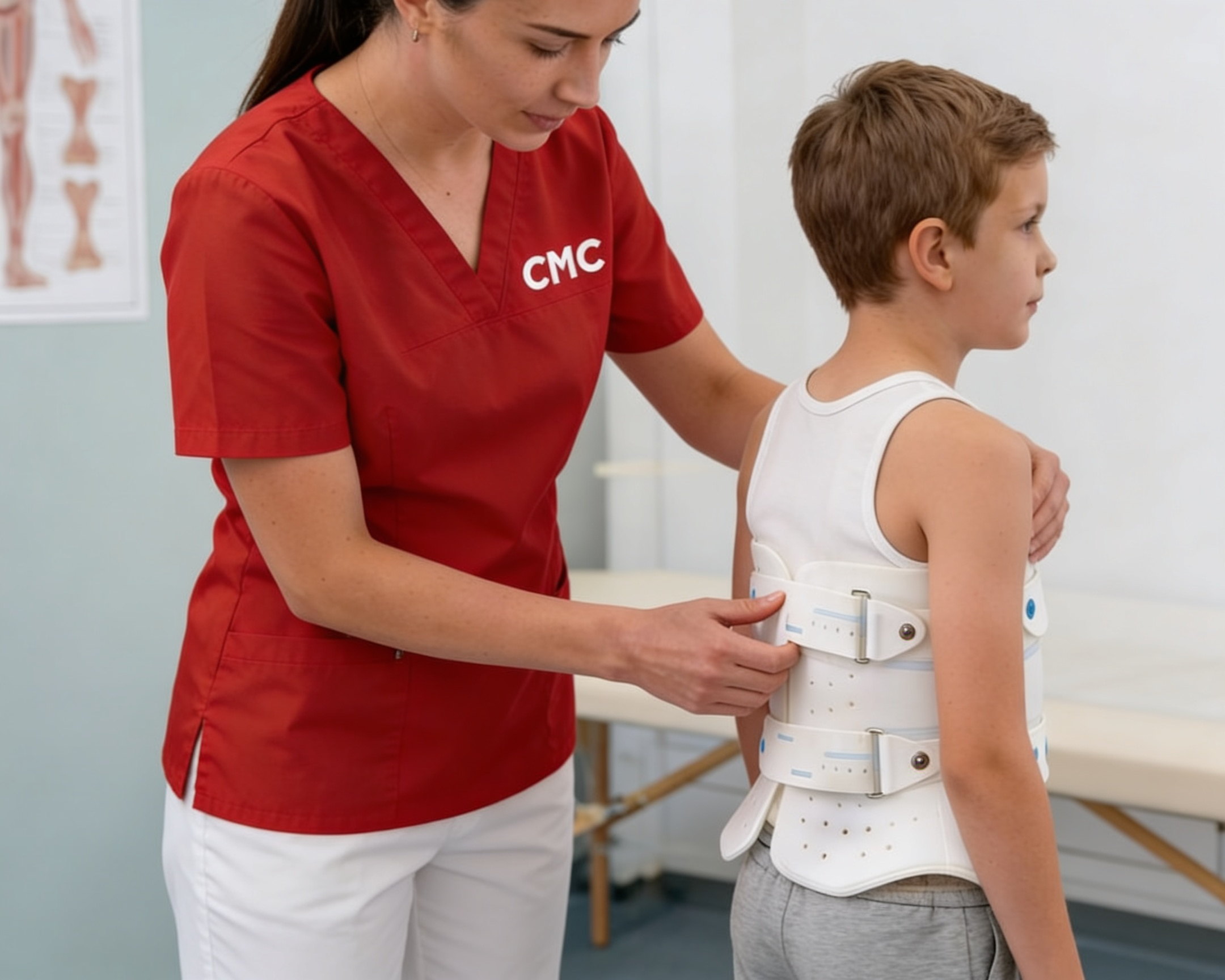
- 3D Body Scan: We utilize advanced 3D scanning technology to capture precise body contours and spinal geometry. This non-invasive process ensures highly accurate measurements, allowing for a brace that is both effective in correction and comfortable for daily wear.
- Custom Brace Design: Based on clinical findings and 3D scan data, a fully customized scoliosis brace is digitally designed using CAD/CAM technology. Each brace is tailored to apply targeted corrective forces specific to your curve pattern, ensuring maximum therapeutic effectiveness.
- Fitting & Adjustment: Once fabricated, the brace is carefully fitted to ensure optimal alignment, pressure distribution, and comfort. Minor adjustments are made as needed, and patients receive detailed guidance on proper wear, care, and adaptation to daily activities.
- Followup Care: Regular followup appointments are scheduled to monitor progress, evaluate treatment effectiveness, and make necessary adjustments to the brace. As the body changes especially in growing adolescents the brace is modified to maintain optimal correction over time.
Why Choose Us
- Advanced 3D scanning technology
- Fully customized brace solutions
- Experienced specialists in scoliosis care
- Continuous monitoring and support
- Focus on non-surgical treatment
We are committed to delivering effective, patient centered care.
Frequently Asked Questions
- What is the best treatment for scoliosis?
- Can scoliosis be treated without surgery?
- How effective are scoliosis braces?
- How long should a brace be worn?
- Can adults use scoliosis braces?
- When should someone consider a scoliosis brace?
- Can a scoliosis brace actually correct the curve?
- Is wearing a scoliosis brace painful or uncomfortable?
- How long will I need to wear the brace?
- Can scoliosis get worse without treatment?
- Is bracing an alternative to surgery?
- Are scoliosis braces visible under clothing?
- How do I know if my child needs a scoliosis screening?
- What makes a custom scoliosis brace different from a standard brace?
It depends on severity. For moderate cases, bracing is the most effective non-surgical option.
Yes, many cases can be managed successfully with bracing and physiotherapy.
Braces are highly effective in preventing progression when used as prescribed.
This varies but typically ranges from several hours a day to full time use, depending on the case.
Yes, adult braces are effective for pain relief and posture improvement depending on the condition.
A scoliosis brace is typically recommended when the spinal curve reaches a moderate range usually around 20-40 degrees and there is a risk of progression especially in children and teenagers who are still growing. Early intervention with bracing can help prevent the curve from worsening.
In growing patients, a properly designed custom brace can not only stop progression but, in some cases, partially reduce the spinal curve. The effectiveness depends on factors such as age, curve severity, and how consistently the brace is worn.
Modern custom braces are designed for comfort and functionality. While there may be a short adjustment period, most patients adapt quickly. Proper fitting and followup adjustments ensure the brace remains comfortable and effective.
The duration depends on the patient’s age and growth stage. Teenagers typically wear the brace until they complete their growth phase, while adults may use it as needed for symptom relief and support.
Yes, scoliosis can progress over time, particularly during growth spurts in adolescents. Without proper management, the curve may worsen, potentially leading to pain, posture issues, and in severe cases, the need for surgery.
Yes, bracing is the primary non-surgical treatment for moderate scoliosis. Its main goal is to prevent curve progression and reduce the likelihood of requiring surgical intervention.
Modern braces are low profile and custom fitted, making them less noticeable under everyday clothing. Most patients are able to continue normal daily activities with minimal disruption.
If you notice uneven shoulders, a tilted posture, or a visible curve in the back, it is advisable to seek a professional evaluation. Early screening is simple and can help detect scoliosis before it progresses.
Custom braces are designed using precise measurements and advanced 3D technology to match the patient’s unique spinal curve. This results in better fit, improved comfort, and more effective correction compared to generic braces.

 Call Us