
Table of Contents
- Introduction
- What Is Anterior Pelvic Tilt?
- Quick Self-Check for Anterior Pelvic Tilt
- What Causes Anterior Pelvic Tilt?
- How to Tell If You Have Anterior Pelvic Tilt?
- Best Exercises to Fix Anterior Pelvic Tilt
- Your 10-Minute Daily Routine
- How Long Does It Take to Fix APT?
- How to Track Your Progress
- Daily Habits and Lifestyle Tips
- Final Thoughts
- FAQs
Do you feel a tight pain in your lower back? Or notice your stomach sticks out even when you stand straight? You’re not imagining it, and you’re not alone. In fast-paced cities like Dubai and Abu Dhabi, long hours at desks, in traffic, or working remotely have made anterior pelvic tilt exercises essential for everyday relief and realignment. Modern lifestyles limit movement, but the right corrective routine can restore balance, starting today.
But this can also lead to anterior pelvic tilt (APT), a forward rotation of the pelvis that exaggerates the lower back’s curve. Over time, it can cause poor posture, lower back pain, tight hips, weak glutes, and a slightly protruding abdomen.
What Is Anterior Pelvic Tilt?
Anterior pelvic tilt is a postural condition where the front of the pelvis rotates downward and the back lifts upward, increasing the curve (lordosis) of the lower spine. This misalignment shifts your center of gravity, strains supporting muscles, and can lead to chronic discomfort if left unaddressed.
Quick Self-Check for Anterior Pelvic Tilt
Stand naturally in front of a mirror and observe your posture:
If your buttocks stick out and your lower back has a deep arch, you may have an anterior pelvic tilt.
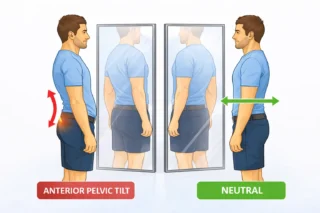
But the good news is that doing the right anterior pelvic tilt exercises can fix your posture, ease back pain, and make daily movement feel smoother. This guide breaks down the main causes, explains how to perform effective exercises to correct anterior pelvic tilt, and shares simple, science-backed habits to build a strong, balanced body. Whether you’re at home, in the gym, or at work, these routines help you start improving your posture today.
What Causes Anterior Pelvic Tilt? (And Why It’s So Common Today)
Your pelvis connects your spine, hips, and legs, helping your body move smoothly. But with today’s long sitting hours and limited movement, that natural balance often gets disrupted, leading to anterior pelvic tilt.
- Prolonged Sitting: Sitting for long periods of time tightens your hip flexors and loosens your glutes, drawing your pelvis forward and increasing your lower back curve.
- Weak Core: The pelvis cannot be held in place by the weak core and glutes, causing the tight hip flexors and lower back muscles to flex them forward.
- Postural Imbalances: Poor posture, incorrect workout form, or standing with hips pushed out strains your spine and reinforces the forward tilt.
- Lifestyle Factors: Extra belly weight, pregnancy, high heels, or natural body structure can cause a forward movement of the pelvis, thus influencing posture.
How to Tell If You Have Anterior Pelvic Tilt?
Many people live with anterior pelvic tilt (APT) without realizing it, until back pain, hip tightness, or poor posture start to show. Recognizing the signs your body gives you helps you detect APT early and save yourself from future trouble.
The Thomas Test (Trusted by Physiotherapists)
Sit on the edge of a bench or bed, lean back, and pull one knee to your chest while letting the other leg hang. If the hanging thigh lifts off the surface, your hip flexors are tight. This is a key sign of anterior pelvic tilt. If it stays flat, your pelvic alignment is likely closer to neutral.
Visual Posture Cues
Get in front of a mirror in a natural position and observe the posture. When you have excessive arching of the lower back, your stomach protrudes a little and your hips flex back. This is a sign of anterior pelvic tilt. Another indication is a belt, but the belt line is downward-sloping, as usually happens with individuals who sit a lot or train their upper body more than their core and glutes.
Physical Symptoms You Might Feel
Common signs include tight hips, lower back pain, and weak glutes or hamstrings. You might also feel knee discomfort or notice your walk feels uneven. These issues develop as muscle imbalances affect your spine, pelvis, and even your breathing mechanics.
Movement-Based Clues
You may overarch your lower back during exercises in planks, squats, or push-ups. Glutes may feel hard to activate, and your core might not engage properly. These small patterns are signs of muscle imbalances which cause pelvic tilt, but the good news is that they can be re-conditioned by specific correction exercises.
Best Exercises to Fix Anterior Pelvic Tilt
Stretch tight areas like the hip flexors and lower back, while strengthening weak muscles such as the glutes, hamstrings, and core. You can do these anterior pelvic tilt exercises anywhere, at home, in the gym, or even during work breaks, making them ideal for people with busy lifestyles in Dubai, Abu Dhabi, or beyond.
I. Half-Kneeling Hip Flexor Stretch
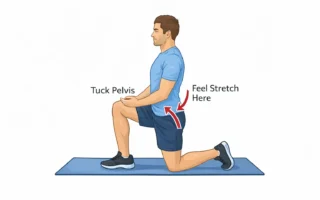
This pose is used to loosen tight hip flexors which draw your pelvis forwards.
- Kneel on one knee and place the other foot in front.
- Tuck your pelvis slightly and squeeze your glutes.
- Lean forward gently until you feel a stretch in the front of your hip.
- Hold for 30 seconds, switch sides, and repeat twice.
Note: Keep your ribs low and your core tight. Don’t bend your back.
II. Glute Bridge
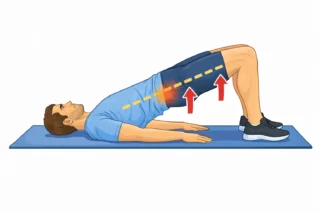
This exercise tightens your buttocks and hamstrings to help in the support of the lower back.
- Lie on your back with your knees bent and feet flat.
- Press through your heels and lift your hips until your body forms a straight line.
- Squeeze your glutes at the top for 3–5 seconds.
- Lower slowly and repeat 10–15 times.
Note: Do not lift with your lower back. Use your hips.
III. Posterior Pelvic Tilt
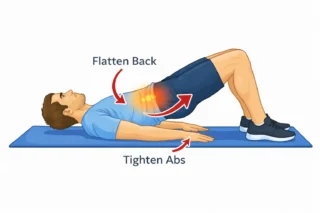
This exercise trains your body to discover a neutral position of the pelvis.
- Lie on your back with your knees bent.
- Tighten your abs and glutes to press your lower back into the floor.
- Hold for 5 seconds, relax, and repeat 10–20 times.
IV. Plank
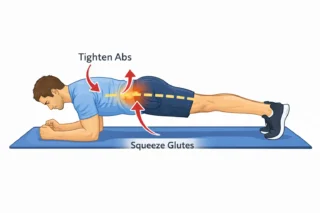
It’s one of the best exercises to make your core stronger and ensure that your lower back doesn’t arch excessively.
- Hold a forearm plank with your body in a straight line.
- Pull your belly button in and squeeze your glutes.
- Hold for 20–60 seconds.
Note: Keep your hips even. Don’t let them dip or lift up.
V. Bird Dog
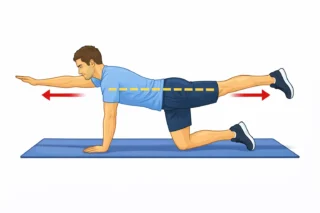
This exercise enhances core control and strengthens your hips.
- Start on all fours.
- Reach one arm forward and the opposite leg back.
- Hold for 3 seconds, then switch sides.
- Repeat 10 times per side.
Note: Keep your hips still and your back flat.
VI. Bodyweight Squat
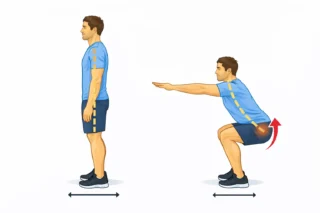
It’s a basic whole-body exercise that enhances balance and posture.
- Stand with your feet shoulder-width apart.
- Brace your core and lower into a squat while keeping your back straight.
- Push through your heels to stand up and squeeze your glutes at the top.
- Do 15–20 reps for 2–3 sets.
Note: Move slowly and with control. Focus on form more than depth.
Your 10-Minute Daily Routine to Fix Anterior Pelvic Tilt
If you’re new to these exercises, start with this simple daily plan:
Beginner Plan (10–15 minutes):
- Posterior Pelvic Tilt — 2 sets of 10 reps
- Glute Bridge — 2 sets of 10 reps
- Half-Kneeling Hip Flexor Stretch — 2 sets of 30 seconds per side
- Bird Dog — 2 sets of 10 reps per side
Advanced Plan (15–20 minutes):
- Add Plank — 3 sets of 30–45 seconds
- Add Bodyweight Squats — 2 sets of 15 reps
How Long Does It Take to Fix Anterior Pelvic Tilt?
Most individuals see results in 4–10 weeks after performing the specific exercises described above. These routines take only 10–20 minutes a day. The key is consistency: strengthen weak muscles (glutes, hamstrings, core) and stretch tight ones (hip flexors, lower back). Also, include short movement breaks and posture checks during long sitting sessions.
How to Track Your Progress?
You’ll notice improvements over time if you stay consistent. Take a side-view photo before you begin, then again every 2 weeks. You’ll see your pelvis slowly returning to a neutral position. Here’s what to look for:
| Timeline | What to Expect |
|---|---|
| Day 1 | You’ll start becoming aware of your posture. |
| Week 1 | Less stiffness in hips and back. |
| Week 4 | Flatter stomach, easier core engagement. |
| Week 10 | Posture feels natural and movement is balanced and pain-free. |
Daily Habits and Lifestyle Tips to Prevent Anterior Pelvic Tilt
Once you’ve improved your pelvic alignment, the next challenge is maintaining it. Even the best exercises for anterior pelvic tilt won’t last if your daily posture, mobility, and movement habits promote poor alignment. To fix that, you need to:
- Move Every Hour: Stand and stretch or walk for 2–3 minutes to prevent hip tightening.
- Strengthen Core & Glutes: Support your pelvis with planks, glute bridges, or dead bugs.
- Stretch Daily: Target hip flexors, quads, and lower back to maintain mobility.
- Check Your Posture: When sitting or standing, ensure hips are slightly higher than knees, feet flat, and core gently engaged.
- Train Mindfully: Use your core and maintain a neutral spine during workouts.
- Rest and Hydrate: Prioritize sleep, drink enough water, and use foam rolling or massage to keep muscles supple.
Final Thoughts
Anterior pelvic tilt is fully reversible with consistent anterior pelvic tilt exercises, balanced strength training, and mindful posture habits. At Canadian Medical Center, our physiotherapy and posture specialists recommend starting these simple yet highly effective exercises early, and maintaining them long-term, as the tilt can gradually return without ongoing support. Sustainable correction isn’t just about movement; it’s about integrating expert-guided habits into daily life.
FAQs
Can I really fix anterior pelvic tilt if I’ve had it for years?
Yes, you can. Even if you’ve had it for a long time, consistent stretching and strengthening can make a big difference. Focus on loosening tight hip flexors, strengthening your glutes and core, and improving your posture. It takes time, but it’s definitely fixable.
Will strength training alone fix it, or do I need to stretch too?
You need both. Strength training helps weak muscles, but stretching releases tight ones. Stretch your hip flexors and lower back, and strengthen your glutes and core to bring your body back into balance.
How often do I need to do the exercises to see results?
Aim for 3–5 times a week, combining stretching and strengthening. Even short daily sessions help, being consistent matters more than long workouts once in a while.
Can sitting less or changing my sitting posture help?
Yes, a lot. Sitting too much can cause or worsen APT. Use a supportive chair, take standing or walking breaks, and keep your pelvis gently tucked while sitting. Small daily changes really add up.
Is there a point where APT can’t be fixed naturally?
Usually not. Most people can fix it with the right exercises and habits. If you have pain, numbness, or other symptoms, it’s best to see a physiotherapist or doctor for a personalized plan.
Will fixing the tilt change how I look or feel?
Yes. You’ll stand taller, your lower back won’t arch as much, and your stomach may look flatter. You’ll likely feel stronger, move better, and have less pain or tightness.
How long do the effects last if I stop doing the exercises?
If you stop completely, the tilt can slowly come back. Your muscles remember some of the progress, but doing a few maintenance stretches and exercises helps keep your posture aligned.
Can I combine these exercises with my regular gym routine?
Absolutely. You don’t need special equipment, just add glute, hamstring, and core work to your routine. Focus on good form, engage your core, and avoid over-arching your lower back.

 Call Us